
What Kansas Property Tax Records Reveal
No single public portal replaces the county Appraiser and Treasurer in Kansas. The Appraiser's tax roll describes the parcel and its valuation. The Treasurer's account shows the bill and payment status. Some county portals link the two offices, but knowing which office created a number matters when a field needs correcting.
A parcel card can also list the owner or taxpayer name, mailing and situs addresses, property type, land and improvement values, prior appraisals, and a legal description. Treasurer histories may show payment dates or an outstanding balance. Public fields differ by county. Keep the tax year and source office with every amount, so a bill is never mistaken for a current appraisal or a recorded sale price.
| Field | What It Shows | Where |
|---|---|---|
| Appraised or market value | The county's valuation for the applicable year. | County Appraiser |
| Assessed value and class | Appraised value adjusted by the property's assessment class. | County Appraiser |
| Exemption or special value | A status or adjustment shown for a tax year, where published. | County Appraiser |
| Taxable value and levy | The basis and taxing jurisdictions used for the bill. | Appraiser, Clerk, and taxing units |
| Bill and payment status | Amount billed, payments, balance, and any delinquency record. | County Treasurer |
| Sale or sales validation | A transaction reference, if the county displays one. | Recorder and/or Appraiser |
Market value is not the same as appraised value. Neither one equals the amount due. A recorded sale consideration is a separate figure tied to a transaction, not a current market estimate. For what these numbers mean apart from the bill, see the Kansas property value comparison.
Kansas Property Tax Class Percentages
The Kansas Constitution assigns a percentage to each class of real property. In general, assessed value equals the appraised amount multiplied by that statutory percentage. The result depends on the parcel's class. It also depends on any exemption or special valuation. Agricultural land is valued by income or productivity. Homes are valued by the market method instead.
| Property class | Published assessment percentage | Valuation note |
|---|---|---|
| Residential real property | 11.5% | Class percentage applied to appraised market value. |
| Agricultural land | 30% | Appraised using income or productivity. |
| Vacant lots | 12% | Separate class from residential improvements. |
| Qualified nonprofit property | 12% | Confirm qualification and the county's record. |
| Public utility property | 33% | State class percentage. |
| Commercial or industrial property | 25% | Classify from the county's property record. |
| Other urban or rural real property | 30% | Use the class shown on the local roll. |
A parcel's class is not a county tax rate. Mill levies come from taxing jurisdictions. The County Appraiser values the parcel. The Treasurer bills and collects. Check the class and year on the local record itself rather than applying a percentage to a number from some other property.
In broad terms, assessed value is the appraised amount times the class percentage. Taxable value may then reflect an exemption or special treatment. The bill applies local levies plus any charges or credits. A County Clerk may hold budget and levy information. But the Appraiser sets no local levy, and the Treasurer does not decide market valuation.
Kansas Property Tax Values and County Updates
Kansas real property is generally appraised at market value as of January 1 each year. The Appraiser studies sales and parcel characteristics, then certifies the roll under state rules. The notice calendar, public portal refresh, and availability of prior-year figures remain county-administered.
Sedgwick County is a local example, not a statewide calendar: its public guidance says 2026 real-property notices begin March 1. Douglas County says its online appraised values update in November after the current tax year's calculation. Those examples describe different points in the annual cycle, so use the date on the parcel's own notice and county page.
Four dates can matter for one parcel. The valuation date is January 1; a notice date tells when the owner is advised; the appraiser's roll certification or portal refresh follows the county's schedule; and the Treasurer's bill and payment dates belong to the tax year. A payment posting date does not mean the property was newly appraised on that day.
Read Sedgwick County's appraisal and valuation explanation for its January 1 basis and local process.
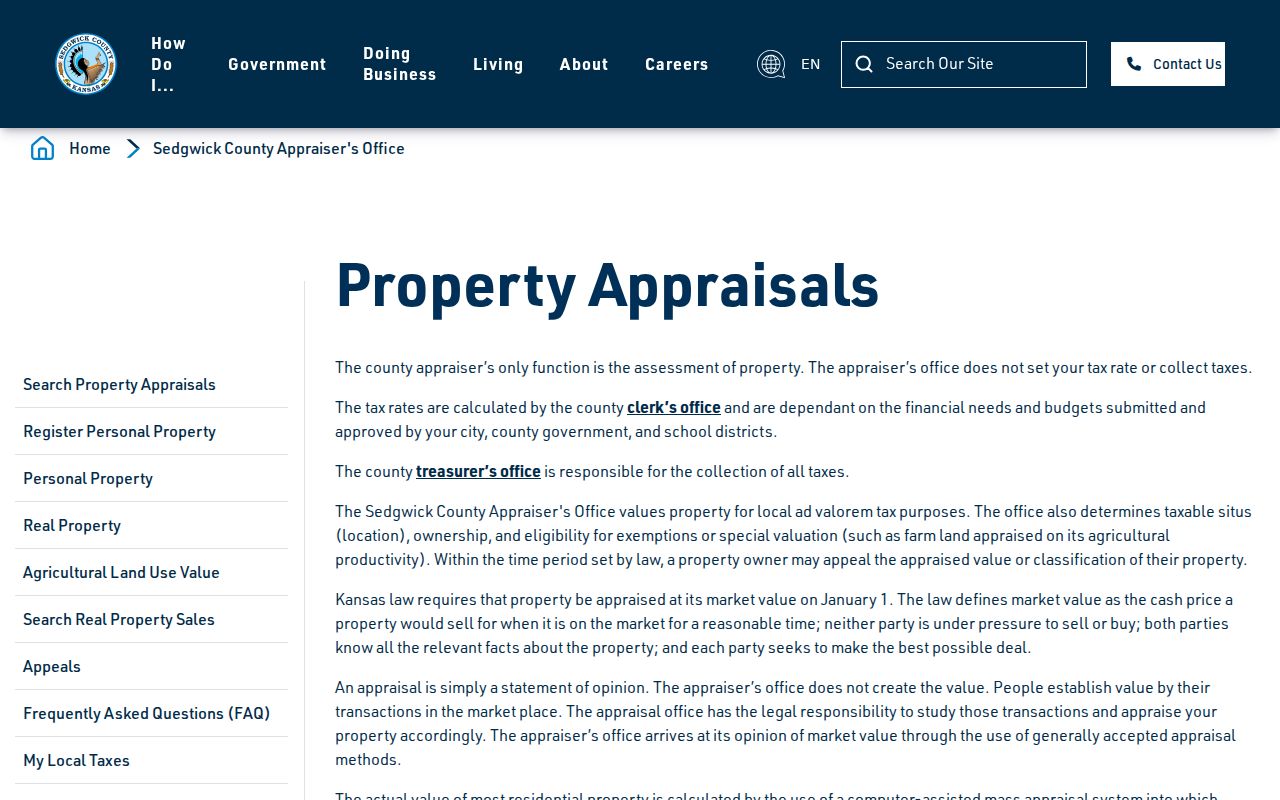
The Sedgwick explanation shows the state valuation framework through one county's Appraiser page. It sets no notice dates for other counties.
Kansas Property Tax Fields in Douglas County
Douglas County's Advanced Search is a concrete example of the fields a county may expose. It is not a Kansas-wide form. A reader can narrow by parcel key, situs, owner, neighborhood, subdivision, or size. That happens before opening a property card. The full Douglas form includes the inputs below. Other counties may use fewer fields, different labels, or a separate Treasurer system.
| Field | Entry type | Use in a property tax search |
|---|---|---|
| Quick Ref ID, RE Tax ID, warrant number | Text key | Match a county account or notice. |
| Street number from/to and street name | Range and text | Find a situs parcel or group along a street. |
| City and ZIP from/to | Selection and range | Narrow local tax-roll results. |
| Neighborhood | County label | Filter by a county-defined area. |
| Property type and status | Multi-select and select | Includes real property, manufactured homes, natural resources, personal property, and other types; status options are county-specific. |
| Owner name, business name, owner ID | Text keys | Find an individual or entity account. |
| Abstract/subdivision code and name | Code, selection, and text | Use a recorded land-description label. |
| Block, tract/lot, acreage from/to | Text and numeric range | Find platted lots or land by size. |
| Search, reset, and result sorting | Buttons and selection controls | Set the search, clear it, or sort a result list. |
See the Douglas County property search form for live field names. The county's Appraiser page also links its forms, appeal material, exemptions, and payment-under-protest information. Douglas County Appraiser resources show the county-specific routes that sit beside its property search.
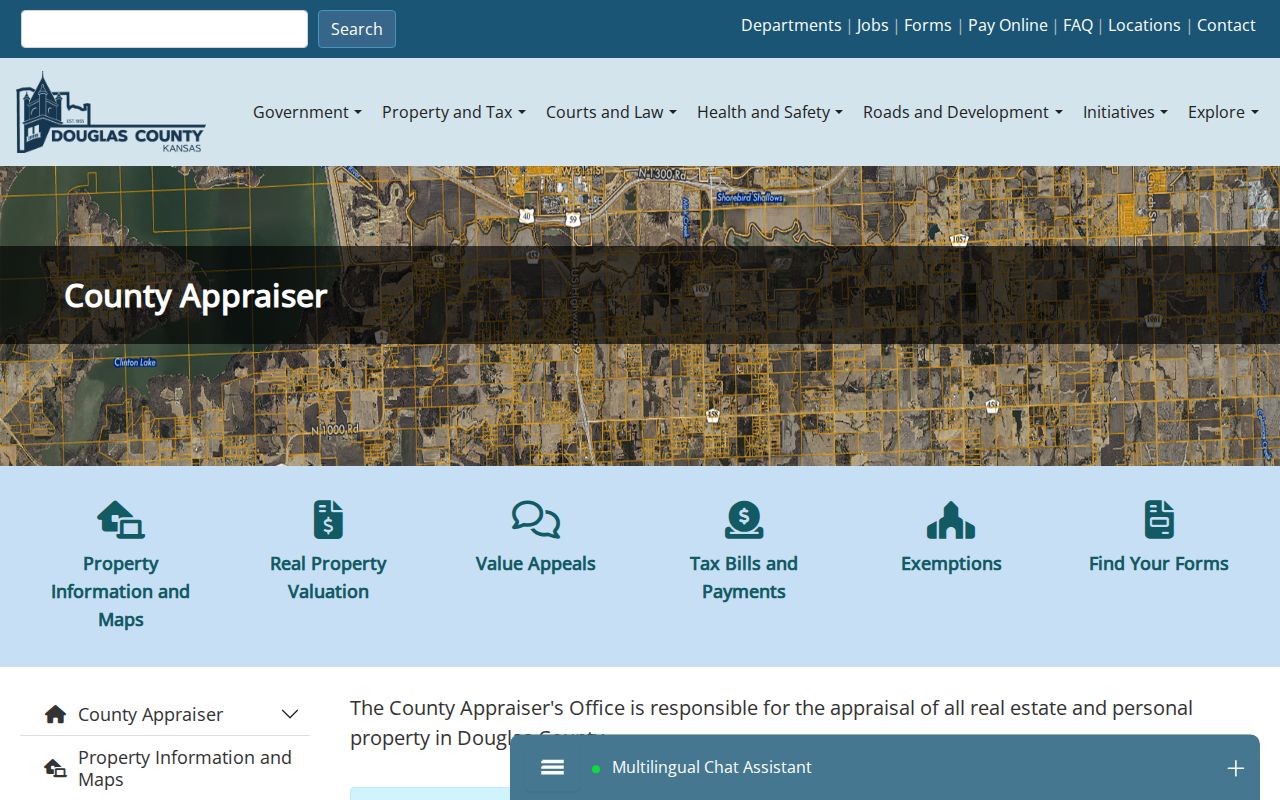
The Douglas County Appraiser page opens one county's valuation and appeal tools. For other Appraiser offices, the local county directory is the route.
The field set helps most when an address is incomplete. A street range or owner name can narrow a county property search. A business name, subdivision, lot, or acreage works too. A Douglas property type menu is not a statewide class list. Its status options are local to Douglas County. Use the local field help if a result seems missing.
Kansas Appraiser and Treasurer Records Differ
The two offices answer different questions even when their records share one county website. The Appraiser keeps valuation and property characteristics. The Treasurer posts bills, receipts, balances, delinquency, and tax-sale steps. In some counties the County Clerk's records explain budgets or levies, but the Clerk replaces neither parcel valuation nor Treasurer billing.
Sedgwick County publishes a crosswalk describing deed, County Clerk, Appraiser, and Treasurer records together. That workflow shows how one county links ownership, assessed value, levies, and billing without collapsing them into a single number.
See the Sedgwick County real-estate, appraisal, and tax-record explanation for its local cross-reference.
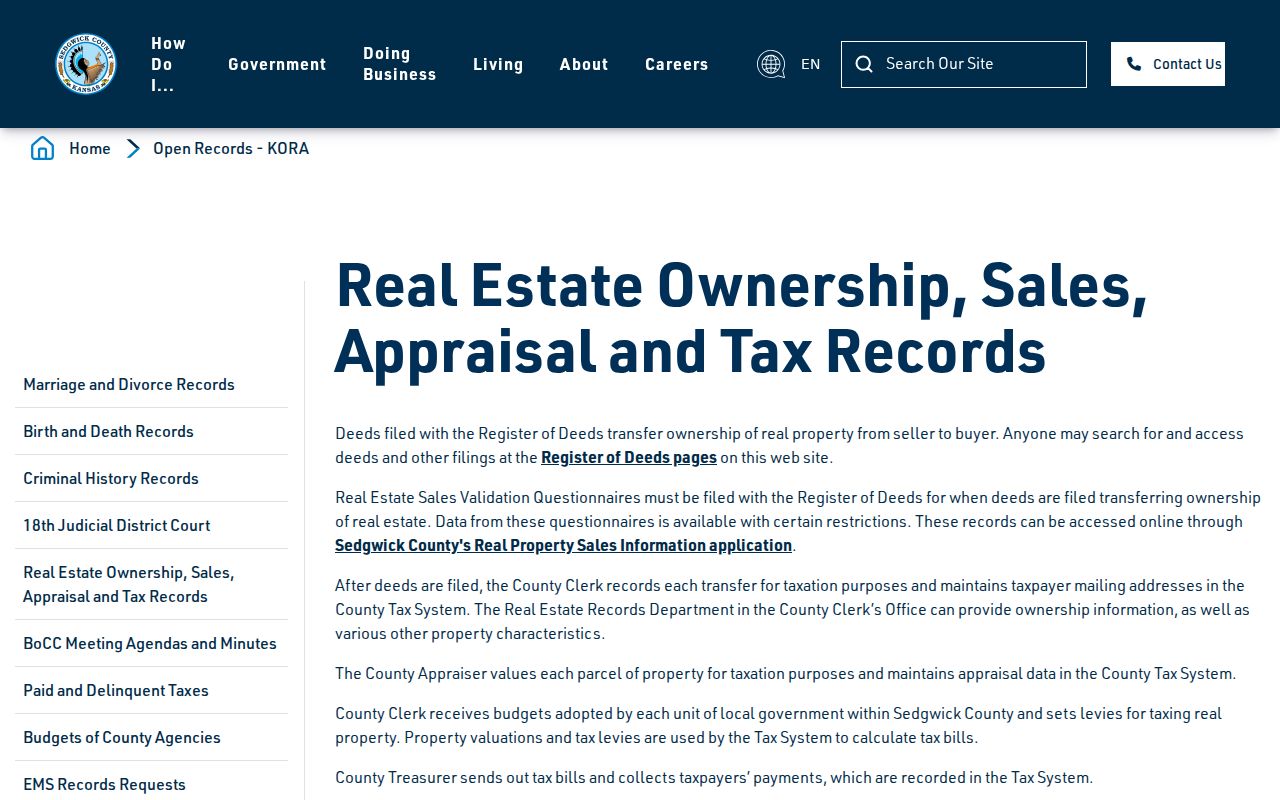
That crosswalk tells you which office to call. It depends on the question. A parcel card, a levy dispute, or a payment history each lead somewhere different.
Take the parcel number to the Appraiser for the card, value, classification, or exemption. Take it to the Treasurer for the amount due, a receipt, delinquency, or sale procedure. The state county list points to the right county government, and each county posts its own phone, email, hours, and online services. The Sedgwick page and Douglas field names do not travel.
Kansas Property Tax Exemptions and Taxable Value
County systems often show a bare exemption code instead of the application behind it. Some show a special-valuation flag instead. Kansas valuation records can separate property type, status, exemption type, approval status, and effective or termination dates. Ask the Appraiser which record backs a displayed flag and which tax year it touches.
Verify these categories in the county record:
- Nonprofit or charitable-property exemptions.
- Agricultural or productivity valuation.
- Other statutory or special-use treatment.
- Homestead tax-relief or refund program records.
An exemption changes taxable value. It does not change the sale price or the January 1 appraised value. A flag alone proves no eligibility or occupancy. Check the county's application and the tax-year record. The County Appraiser holds the valuation record. The Treasurer's statement shows the resulting bill and credits.
The Kansas DOR's Orion List Manager documents query fields for property list, type and status, taxing unit, exemption type and status. It also covers effective and termination dates. That describes a state appraisal workflow, not a public statewide account search. A county card may compress all of it into a short code. Request the application or approval record that explains a displayed adjustment.
Look Up a Kansas Property Tax Bill
Start with the parcel's county to find the right Treasurer account. A property card can surface the PIN or tax ID. The balance and payment history live elsewhere. They sit with the Treasurer. The Kansas.gov gateway routes a user to one county. It then asks for a tax statement. Treat it as a payment path only. It is not a statewide delinquency or tax-history database.
- Identify the county from the parcel's physical location, not just the mailing city.
- Open that county Treasurer's bill or payment service and use the parcel number or tax statement details it requests.
- Record the tax year, billed amount, payments, balance, and any delinquency or sale status shown.
- Compare a tax adjustment with the Appraiser's class and exemption record; ask the office that created the field about a discrepancy.
- Assessed value
- The amount produced by applying the property's class percentage to its appraised value, subject to the county's displayed treatment.
- Levy
- A taxing jurisdiction's rate used with taxable value to calculate its share of a bill.
- Taxable value
- The amount to which applicable levies are applied after recorded adjustments.
- Tax lien
- A claim related to unpaid tax; check the Treasurer, court, and recorded instrument for status.
When the online bill search fails, call or email the county Treasurer. Have the parcel or tax ID ready. For a bill or payment record that is not online, ask the custodian. Request a copy. A focused written request under KORA works too.
A counter visit helps when the online account will not reach an older tax year. Hours and terminal access vary by county. A written Kansas Open Records Act request should name the bill and parcel. It should also list the tax years and desired format. The agency must act as soon as possible and by the end of the third business day. It must explain any delay. Reasonable actual costs may be charged in advance.
Kansas Delinquent Property Tax and Sale Records
Kansas publishes no statewide database of delinquent real-estate taxes. The County Treasurer explains balances, interest, payment history, redemption status, and the local tax-sale process. A county payment gateway is not a uniform delinquency list.
Once a tax matter reaches litigation or sale, the record trail spreads across several offices. These include the Treasurer, the sheriff or county publication, the district court, and the Register of Deeds. Search for the court case, sale notice, redemption, and any later sheriff's or tax deed. A tax sale alone proves neither market value nor the clearing of every lien. It also does not prove the clearing of every recorded interest.
Call or email the county Treasurer for its calendar and public list. Then use the Kansas Courts' CaseSearch portal or the courthouse clerk for a related docket. Check the Register of Deeds for any recorded transfer that follows the sale.
These records split naturally into a Treasurer tax account and a sheriff's sale notice. They also include a district-court case and a later deed or order. Use the parcel description and case number to connect them. Court documents do not always surface online. Kansas Courts says public case searches run through CaseSearch, while courthouse kiosks and written clerk requests remain the route for some converted or older documents.
Appeal a Kansas Property Tax Assessment
Start with the county valuation notice. It prints the deadline and the filing instructions that control your case. The Kansas Department of Revenue and Board of Tax Appeals brochure adds a useful first step. Ask the County Appraiser for the property record card and the cost report on your parcel. Owners of homes can also request a comparable-sales report. It lists up to five similar properties, where the county can provide one. Commercial owners may instead ask for an income-valuation report. Whatever route you take, your evidence should speak to the property data, the classification, or the January 1 value. It should target what is actually being disputed.
The BOTA route follows the informal meeting. That appeal is due within 30 days of the mailing that reports the informal result. The calendar matters. Payment under protest works differently. It runs through the Treasurer rather than the appeal board. The brochure warns that abandoning a protest once started can bar a later protest or appeal. That bar covers the same property and tax year. Before choosing either route, rely on the current county notice and guide.
The deadlines for a payment under protest deserve close reading. A taxpayer who pays before December 20 must file the protest by that same date. When an escrow agent or tax service pays before December 20, the deadline shifts. It moves to January 31 of the following year. The brochure also calls for notice of the informal meeting within 15 days on this route. Procedural details like these change, so confirm the current version and your county's form before filing anything. Read the current Kansas valuation appeal and payment-under-protest brochure, then verify the applicable county form and deadline.
Use the notice date, not a guessed calendar. The valuation appeal deadline is the one printed on the county notice. For a payment protest, the brochure gives separate dates based on when tax is paid; check the current guide and ask the Treasurer which procedure fits the parcel and tax year.