
Three Kansas Property Value Figures
Three amounts can appear on one Kansas parcel record. Each answers a different question. The appraised or market value is the Appraiser's opinion for the tax year, while the assessed value applies a constitutional class percentage to that figure. A sale amount simply records one deed transaction, not a standing valuation.
| Value shown | What the number means | Primary record |
|---|---|---|
| Appraised or market value | The county's January 1 valuation of the parcel for the tax year. | County Appraiser |
| Assessed value | Appraised value multiplied by the property's assessment class percentage. | County Appraiser |
| Taxable assessed value | The amount used with local levies after applicable adjustments. | Appraiser and tax account |
| Recorded sale consideration | The amount stated or reported for a transfer, if available. | Register of Deeds or Appraiser sales record |
These amounts never compare cleanly. A year and a class setting must travel with each figure. An appraisal is an opinion for ad valorem taxation, not an offer. Assessed value is only a slice of that appraisal. Taxable value can shift again after exemptions or special treatment.
For scale only, a $300,000 residential market appraisal at the 11.5 percent class level yields $34,500 in assessed value before adjustments. That arithmetic fits no particular Kansas parcel. A sale figure can land higher or lower. The final bill depends on local levies and the tax year's treatment.
Kansas Property Value Classes Use Set Ratios
The Kansas Constitution, Article 11, Section 1, sets the assessment percentage for each class of real property. Residential property sits at 11.5 percent. Agricultural land carries 30 percent. Income and productivity, not market sales, drive that number. Commercial and industrial property uses 25 percent, vacant lots and qualified nonprofit property 12 percent, public utility property 33 percent, and other urban or rural real property 30 percent.
That percentage is not a tax rate. It converts an appraised amount into assessed value. Local taxing districts set the mill levies that later apply to taxable value. Read the class printed on the county card rather than borrowing a percentage from another kind of parcel. The Sedgwick County appraisal explanation shows one county's presentation of the market-value and class framework, not a portal covering every Kansas parcel.
Kansas Property Value Starts on January 1
In Kansas, every parcel gets a fresh value once a year. January 1 is the measurement date. County Appraisers run a mass appraisal that weighs recent sales along with each property's characteristics. After that work is done, the office mails notices and posts updated tax rolls online. The timing varies by county. That matters when you compare numbers. A value pulled from an older parcel card can reflect one point in the annual cycle. A figure from a new notice and the amount on a current payment statement can each reflect a different one. Always match a value to its tax year before relying on it. For one example of how a local office explains this, open the Sedgwick County appraisal and valuation page.
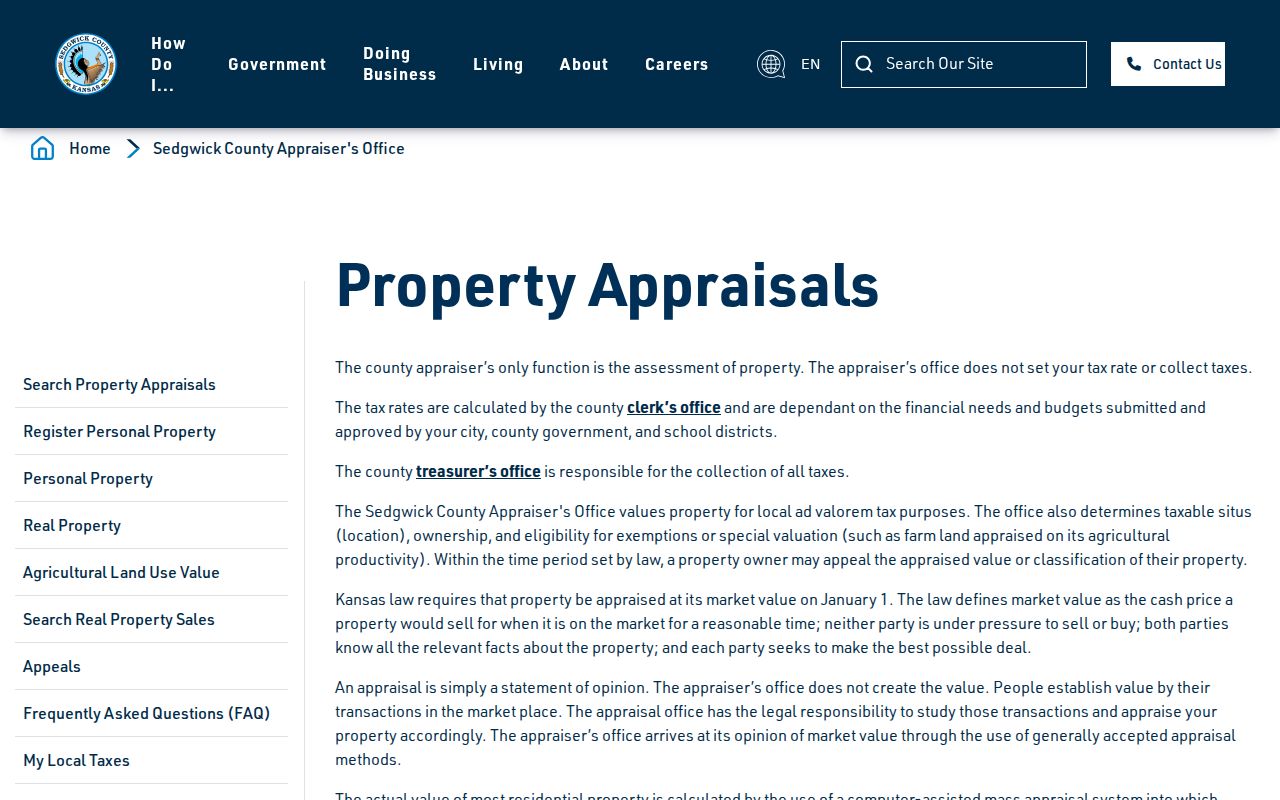
One county's calendar is never the state's. Sedgwick's 2026 notice start is one local example. Douglas's November online roll update is another. Neither marks a Kansas-wide refresh. The valuation date stands apart. It is not the notice date, the roll certification, or the tax-payment date. Dates anchor every comparison. So tag each amount with its tax year and the date you viewed the county portal.
Look Up a Kansas Property Value
Begin in the county where the property sits. Its Appraiser property search will be your main tool. Lookups run by situs address, parcel key, or owner wherever the county offers those modes. Field labels differ from county to county, and the appraiser record, not any statewide page, holds the annual valuation.
- Find the county through the official Kansas county list, using the property's physical location.
- Open that county Appraiser's property search and locate the parcel by address or its local parcel key.
- Copy the exact field label, tax year, property class, appraised amount, assessed amount, and any taxable-value adjustment.
- If a sale figure is shown, keep its date and deed reference separate from the current appraisal.
- Appraised value
- The County Appraiser's January 1 valuation used for the annual tax roll.
- Assessment percentage
- The class factor that converts appraised value to assessed value.
- Assessed value
- The appraised amount after applying the class percentage.
- Taxable value
- The assessed amount subject to local levies after applicable adjustments.
- Sale consideration
- The amount stated or reported in a transfer record, which may not equal market value.
Online searches sometimes come up empty. Then call, email, or visit the county Appraiser. Ask for the existing property record card with its tax year. A KORA request should name the parcel, the record, and the format. The custodian need not create a new report. The response clock is short. The office must act by the end of the third business day or explain a delay. It may collect reasonable actual costs in advance.
Read Kansas Property Value Fields
Many county cards split appraised value between land and improvements before showing a total. Class, characteristics, prior valuations, and sales data often appear too. Not every county publishes every field. Some fields stay blank. Record what the local card actually displays instead of filling gaps from another source.
| Parcel-card field | What to compare | Check before using |
|---|---|---|
| Land value | Appraised portion assigned to the parcel land. | Tax year and land-use/class details. |
| Improvement value | Appraised portion assigned to structures or other improvements. | County property characteristics and any corrections. |
| Total appraised value | Combined appraisal used for the roll. | January 1 valuation year and method. |
| Assessed or taxable value | Class-adjusted or adjusted amount shown for tax use. | Assessment class, exemptions, and special valuation flags. |
| Prior value or sale validation | Historical comparison or transaction reference where shown. | Date, sale terms, and whether the figure is a market sale. |
The appraiser's fields are not the tax bill. Levies, special assessments, credits, and payments live elsewhere. The taxing unit or the Treasurer account holds them instead. None of that belongs in the appraisal total.
Sedgwick County's published parcel-card description covers a lot of ground. It lists the owner and mailing address, legal description, identifier codes, lot size, values, property characteristics, prior valuations, and billing detail. Another county may scatter those details. A card, a map popup, and a tax account might each hold a piece. So save the source page. Note the date you checked it before comparing values over time.
Kansas Property Value and Sale Consideration Differ
A deed or sales-validation entry may list a dollar amount. That figure can be nominal, partial, or excluded. It may describe a transfer that never was an arms-length sale. County Appraisers build studies from qualifying sales. They drop transactions that fail to reflect the market. One recorded sale is evidence of a single event, not a current appraisal of the parcel.
When a county exposes sale or validation data, note the sale date. Note the document reference beside the number. If the assessor page leaves it out, search the county Register of Deeds by party or legal description. Then ask that office about ordering an image or copy. Recorder portals, historical cutoffs, and image fees vary by county in Kansas. The Register of Deeds Association directory provides the local contact route. For the recorded instrument behind a transfer, the Kansas deed records page walks through the index. It also walks through the copy path.
Kansas Exemptions Change Taxable Value
An exemption or special valuation changes what local levies can reach. It does not touch the underlying sale consideration. A county Appraiser often shows only a short code or status flag. The application behind it, plus the effective tax year, may sit in a separate file. The Kansas DOR's property-list tools spell out fields for property type, status, taxing unit, and exemption type. Effective or termination dates get their own fields too.
Ask the Appraiser which document supports the flag. Confirm whether it applies to the year displayed. The Kansas property tax records page covers the bill, levy, exemption process, and appeal route. Those steps sit apart from reading the value number itself. Treat no homestead or tax-relief label as proof of ownership or occupancy. It is a tax-record status that must be read with its year and source.
Kansas Property Values Need a Year
Write the year beside every amount you compare. Say "market value 2026" or "sale consideration 2024." Without that label, an apparent change may not be real market movement. It may just be a new assessment class, exemption, transfer, or tax year.
Portal refresh dates are set locally. Douglas County says online appraised values update in November after the current tax year's calculation. Sedgwick County says real-property notices begin March 1 in 2026. Those examples show why dating matters. The displayed date, the notice, and the valuation year should travel with every number. Check the county's current page rather than an older screen capture. Kansas legislation and administrative guidance on notice and appeal rules can also change. Use the current county notice and the official state brochure for the year in question instead of applying a proposed rule to an earlier value.
What Kansas Assessed Value Cannot Tell You
A Kansas assessed value is a class-based tax figure. It is not the price a parcel would bring in a sale. The appraiser's market-value estimate comes from mass appraisal for ad valorem taxation. It is not a private appraisal for a purchase, sale, or financing decision. A recorded sale may also be older, or unlike the subject property entirely.
Parcel value data can lag a transfer or reflect a later correction. When an amount looks wrong, check the property characteristics, class, year, and supporting record. Then use the county's current valuation notice and its appeal route. Never infer a boundary, title status, or sale price from an assessed number.
A GIS map helps locate the parcel and view county layers. Still, map geometry is tax-reference data, not an appraisal or a legal survey. Keep the office roles separate. The Appraiser holds the valuation card. The Treasurer issues the bill. The Register of Deeds records conveyances. Sorting those duties out makes any property records number easier to interpret.
Tax figure, not a selling price. Appraised, assessed, and taxable values each serve a tax-record purpose. None guarantees a sale amount; review the transaction record separately and use a current valuation method suited to the decision at hand.